
Come Visit Us
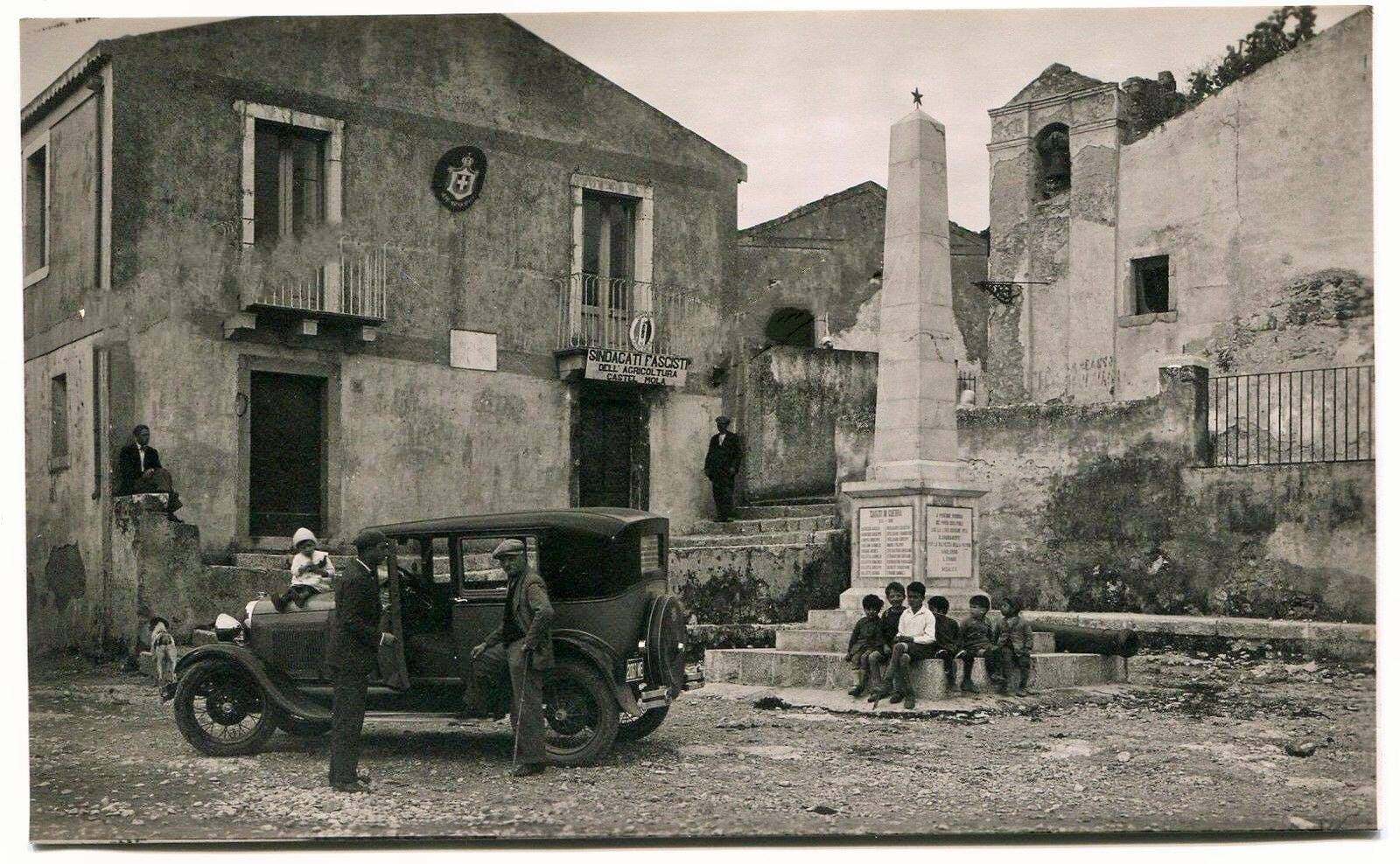
In the early 1900s, Don Vincenzo Blandano began promoting tourism in Castelmola in a small restaurant in the town’s main square, Piazza Sant’Antonino, which had previously housed an ancient monks’ tavern.
A man of wide-ranging interests and culture (he spoke and wrote three languages fluently), he was appointed consul of the Italian Touring Club and, in this capacity, began to promote Castelmola throughout the world. As early as 1924, a group of foreign tourists, at Blandano’s initiative, visited Castelmola and its surroundings. Period photographs show them both in the countryside and in front of the ancient church of San Giorgio—the patron saint of Castelmola—each holding characteristic ferula sticks (young Blandano is seen wearing white shoes and trousers, and sitting cross-legged on the ground in the photo in front of the church).
It was during that period that Don Vincenzo began collecting visitors’ signatures in large volumes, a collection that over the years became the most important in the tourism world and has continued uninterrupted ever since, having not suffered interruptions even during the Fascist period and the Second World War.
But the volumes don’t just contain signatures, because they are full of thoughts, poems, sketches, portraits, photos and, glued into the pages, logos, symbols, or characteristic stickers with a wide variety of contents.
During the same period, Don Vincenzo developed the idea of creating a special dessert wine, almond wine, slightly sweet because it is made from bitter almonds. Originally produced on his estate in Castelmola, it quickly became known and exported throughout the world.
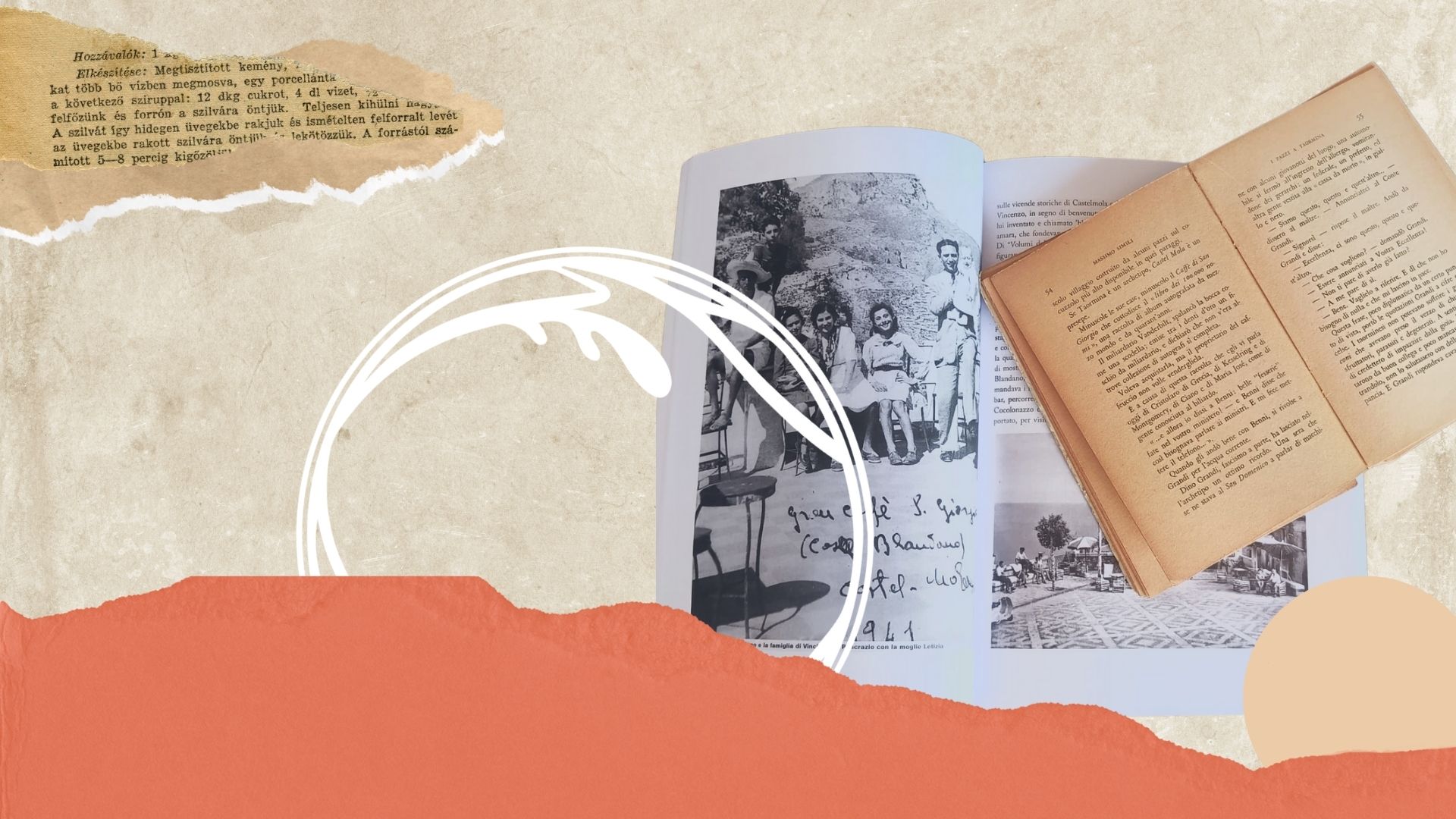
About the ancient, small café, talks Massimo Simili, writer and journalist of the “La Sicilia”, in the 1947 book, “The Madmen in Taormina”, where a chapter ( the third) , entitled. ” The Book Of 100,000 Names” spreads about the characteristics of the place , the importance of the visitors , the signatures of the visitors .
The interior of the bar displayed the most diverse objects( including reed whistles, curved Sicilian pipes, gnarled sticks-a tribute was made to Lord Mountbatten, uncle of the Queen of England-photos of Castelmola and its surroundings, tambourines, ceramic tiles, scacciapensieri-“merranzani”-, ferula seats, products of local handicrafts,) and the exterior was wallpapered and decorated entirely with tiles containing the most disparate , original thoughts (” Don’t give me advice, I know how to err on my own,” etc.) , as well as a mosaic of a large barrel surrounded by monks.
On the walls, inoltra, inscriptions in different languages were painted to inform about the house’s wine offerings-particularly almond wine-and the importance of collecting visitors’ volumes.
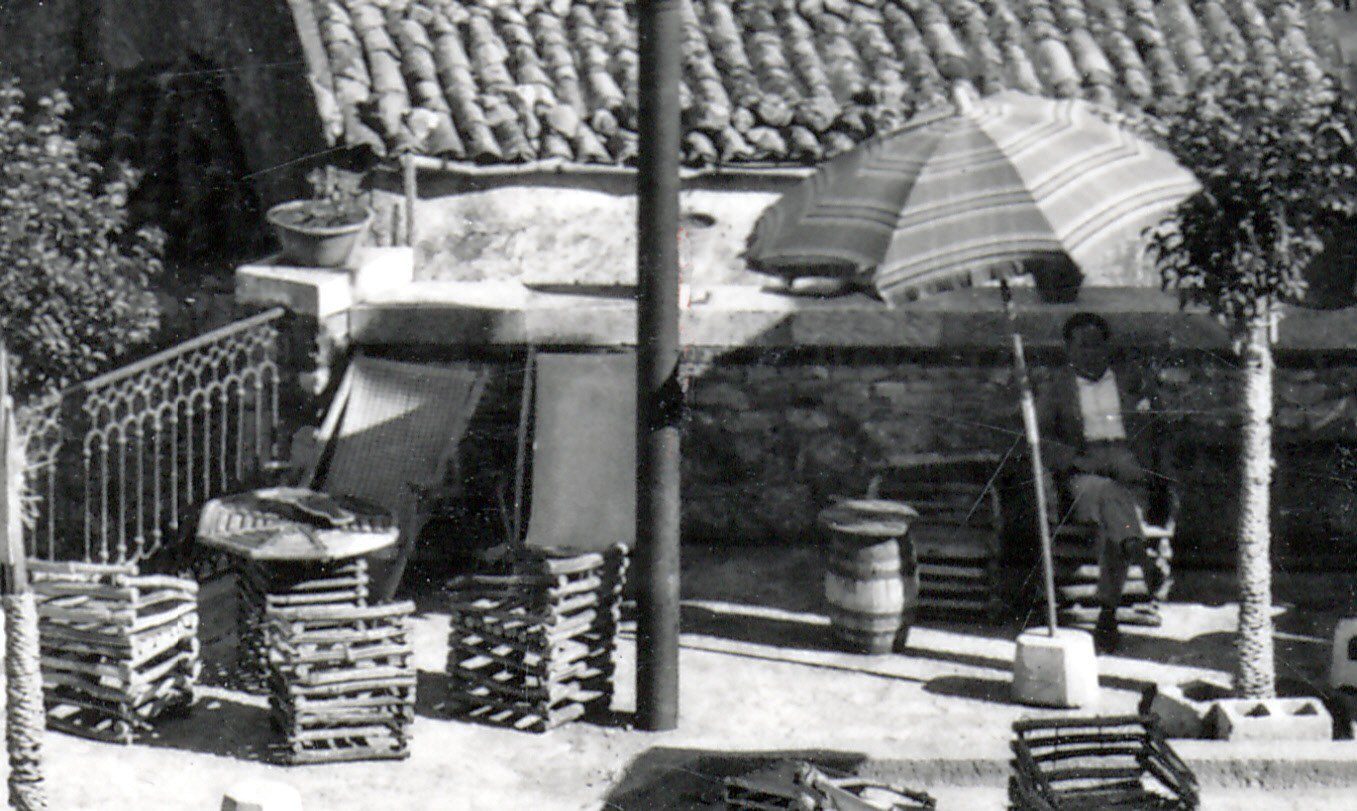
A true visual spectacle, both outside and inside the bar, in a quaint plaza largely filled with tables, seats, armchairs, all made of ferula, and barrels to serve as the base of the tables.
In addition to this, the bar offered the merit, from its small terrace, of a spectacular panoramic view, from the Calabrians, to the entire coast, the sea, and Mount Etna.
The beauty of that view has always enlightened and surprised the visitor, who has enjoyed and enjoys even greater comfort after the expansion the establishment had in the 1950s with the extension of the entrance and a preciously tiled raised floor.
To visitors, a valuable brochure in four languages written by art historian Professor Enzo Maganuco briefly described the history of the town from the founding of the Siculians in the eighth century B.C.
The bar business had continuity during the fascist period, and Blandano’s books also bear the signatures of the German youths who occupied Castelmola during the war.
When the war ended, Taormina and Castelmola experienced great tourism, with the casino and the David award ceremony, then celebrated at the Greek Theater.
Castelmola was a destination for distinguished people from all over the world.
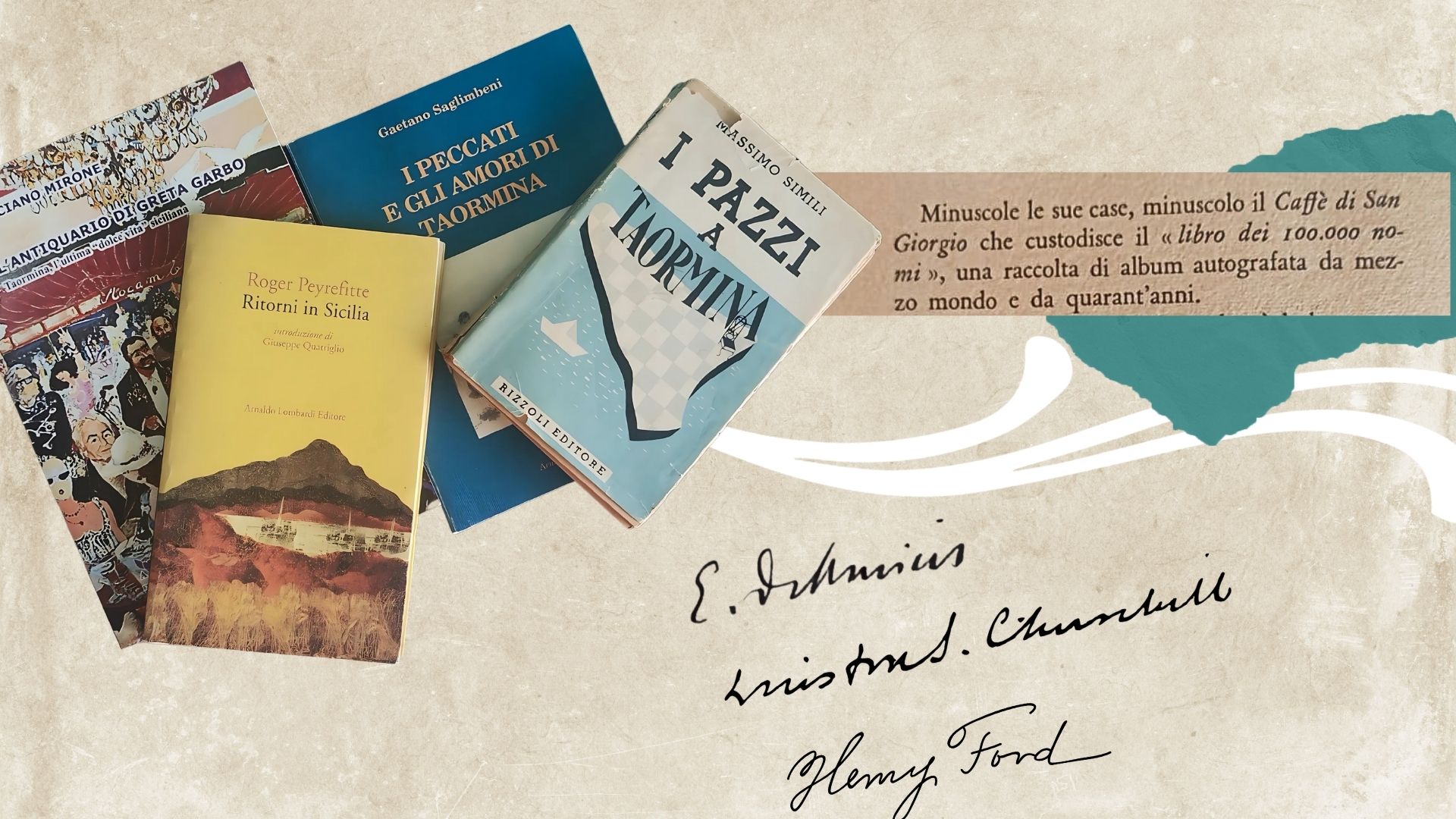
These include the French writer Roger Peyrefitte, who lived for a time at “casa Strazzeri”, between Taormina and Castelmola, and every day walked along the road that led him to the San Giorgio bar, where, sometimes accompanied by Indro Montanelli, he found inspiration for his masterpieces, and also engaged in cordial discussions with Don Vincenzo.
In 1954 he published. “Du Vesuve a l’Etna” (also translated into Italian and German), a book celebrating our south, and in which a lovable chapter is dedicated to San Giorgio coffee.
Another frequent visitor in those years was an American gentleman who would be driven by carriage from Taormina, have sandwiches and wine served, and come down from the terrace of the bar in the afternoon after working on his subjects. He was Orson Welles.
About the history of San Giorgio coffee, its origins-from the ancient monks’ tavern-and its acquired worldwide fame, speaks a distinguished castelmolese, Professor Arturo D’Agostino, in a valuable 1958 publication (“Taormina, Castelmola and Surroundings”) in which he notes, among other things, how that place represents, for the visitor, a true “oasis of peace” .
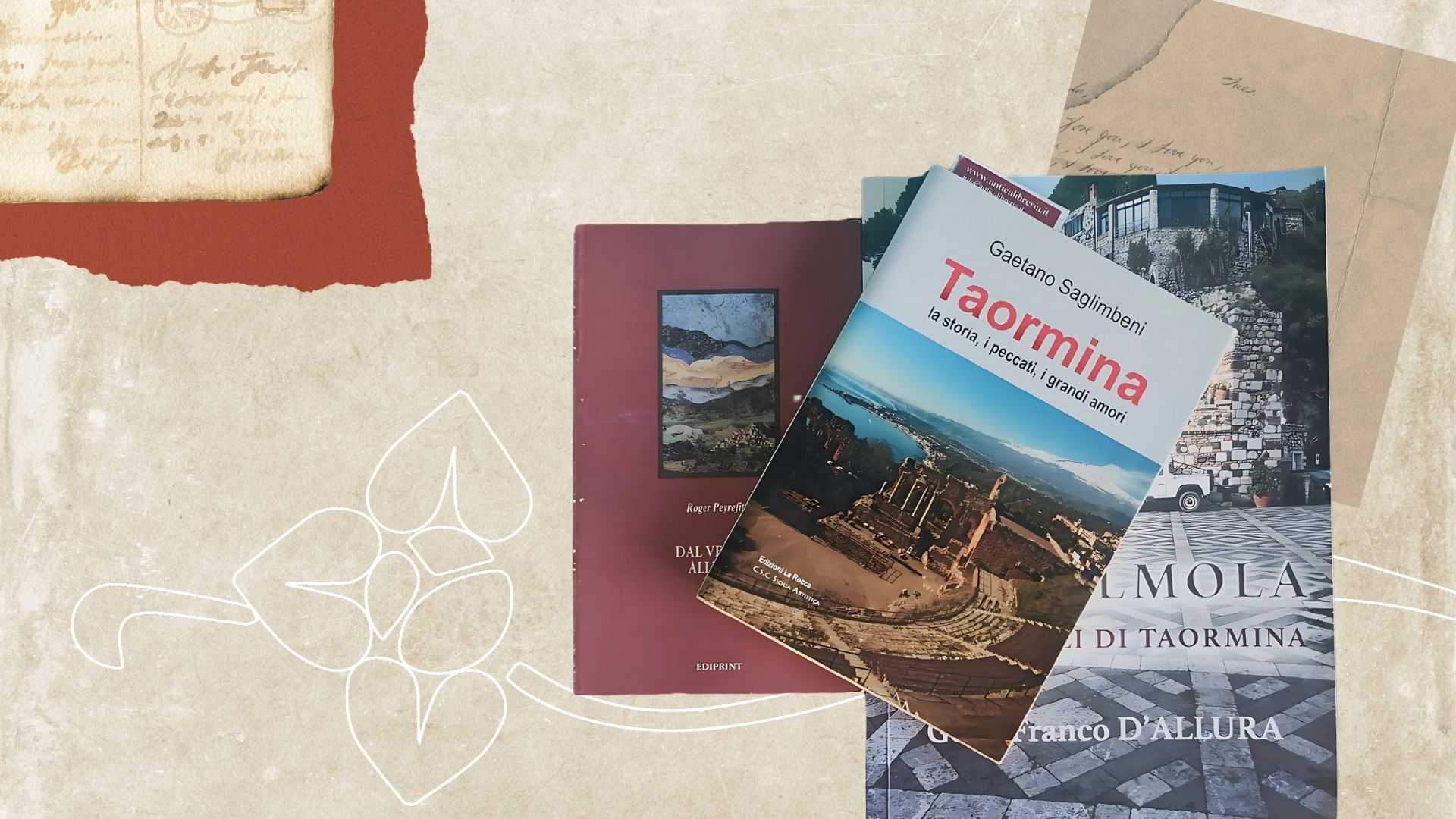
There were countless famous visitors, and the historian of Taormina, Gaetano Saglimbeni, in his 1981 volumes ( “The Sins and Loves of Taormina,” “Taormina, History, Sins and Great Loves”), reprinted several times, wrote that in order to have knowledge of the history not only of Castelmola, but also of Taormina itself, one had to consult “the so-called book of a hundred thousand signatures” (but there are many more) that Vincenzo Blandano, owner of the old San Giorgio café, made available to his guests.
There are the autographs of William II of Germany and George V of England, Paul and Dimitri of Russia, Alfonso of Spain, Aspasia of Greece, Gustavus Adolphus of Sweden, Juliana of Holland, Faruk of Egypt; and those of writers, musicians, movie actors and directors, men of science, tycoons of industry and high finance, famous tailors ( George Bernard Shaw, Guy de Maupassant, Edmondo De Amicis, Somerset Maugham, Joannes Brams, Richard Wagner, Cole Porter, Orson Welles, Renè Claire, Henry Ford, Rockeller, Frank Morgan, Cristian Dior). Names of distinguished tourists and others absolutely unknown, who came from all over the world.”
Prominent visitors to Castelmola, and to the San Giorgio café, include Cardinal Stefan Wiszynski, primate of Poland, and Carol Jòsef Vojtila, bishop of Krakow, the future Pontiff John Paul II.
Of the bar San Giorgio, Don Vincenzo, and the history of tourism, Luciano Mirone writes in his 2008 book, “Greta Garbo’s Antiquarian.”. Taormina, the last Sicilian “dolce vita “.” Some of the photos depict the café as it originally was, Don Vincenzo with some volumes, the interior of the café as it looked in the fascist period, Roger Peyrefitte who, back in Sicily after many years, researches the old books in the small room of the San Giorgio.
Of such an experience Peyrefitte wrote in the volume “Returns to Sicily”, of 1993, where he recalls Blandano, volumes of visitors, and almond wine.
Countless then are the articles around the world that have spoken of this historic bar, its unique collection, the original invention of almond wine, and the view from the same.
Imagination, intuition, ingenuity, and culture made Don Vincenzo great who, through his work, not only founded tourism in Castelmola, but also rendered a significant historical service to Taormina tourism as well
Don Vincenzo’s tradition is continued today by the Intelisano family, which has taken care-with the quality of services offered-to preserve for the visitor the memory
of the San Giorno café, inside which numerous panels recall some of the most significant moments in the history of this incomparable establishment.
And so we perpetuate this history of a prestigious, unparalleled, venue, with the collection of visitors’ volumes and the offering of almond wine, which right there have seen their successful birth now for more than a century.